Copper-clad aluminum is an electrical conductor that has a copper outer sleeve metallurgically bonded to a solid aluminum core. The combination of these two metals makes it particularly suitable for many electrical applications
Standard:
SJ / T 11223-2000
ASTM B 566-93
Features:
Compared to copper conductors:
Superior flexibility thanks to the lower elastic modulus
63% reduction in material weight thanks to the lower specific weight of CCA compared to normal copper
Compared to aluminum conductors:
Better corrosion resistance than aluminum thanks to the copper layer
Lower resistance due to the high electrical conductivity of copper
Better weldability
Greater resistance than aluminum
Application:
In the field of high-frequency signal transmission, it applies to:
• Standard conductor material in CATV coaxial cable;
• 50 Ohm radio frequency antenna;
• Soft coaxial radio frequency cable;
• Data cable
In the field of power transmission it can be applied to:
• Braided wire;
• Power cord;
• Control cable;
• automotive cable;
• Building distribution cable;
• Bar;
• Radio frequency shielding;
• In special electromagnetic wire, it can be applied to:
• Coils in the motor and fans, mahjong machine, speakers
• Voice coils (eg in headphones, earphones, …)
• Windings
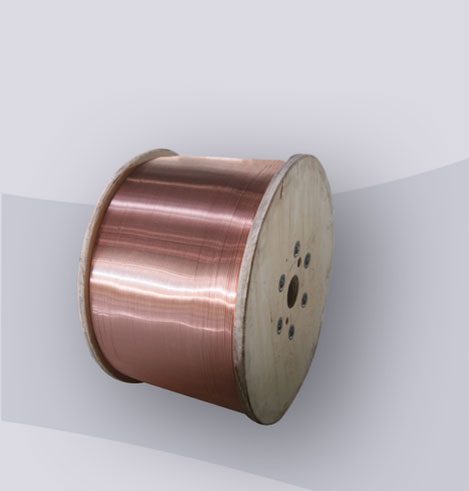
CCA single wire
Copper Clad Aluminum Alloy (CCAA) wire is a type of bimetallic wire that covers the copper on the surface of the aluminum alloy rod. CCAA has high tensile strength like CCAM wire and high conductivity like CCA wire. CCAA wire can be worked like pure copper wire.
Diameter: 0.05mm ~ 2.15mm
Features: small density, light weight, cost saving
Copper-clad aluminum braided wire consists of a number of small CCA wires. The density of CCA wire is lower than that of copper wire, so CCA stranded wire has a length advantage over copper stranded wire. This will help the cable manufacturer reduce production costs. Feature: high flexibility; outstanding bending performance Production range: 0.05mm2-20mm2